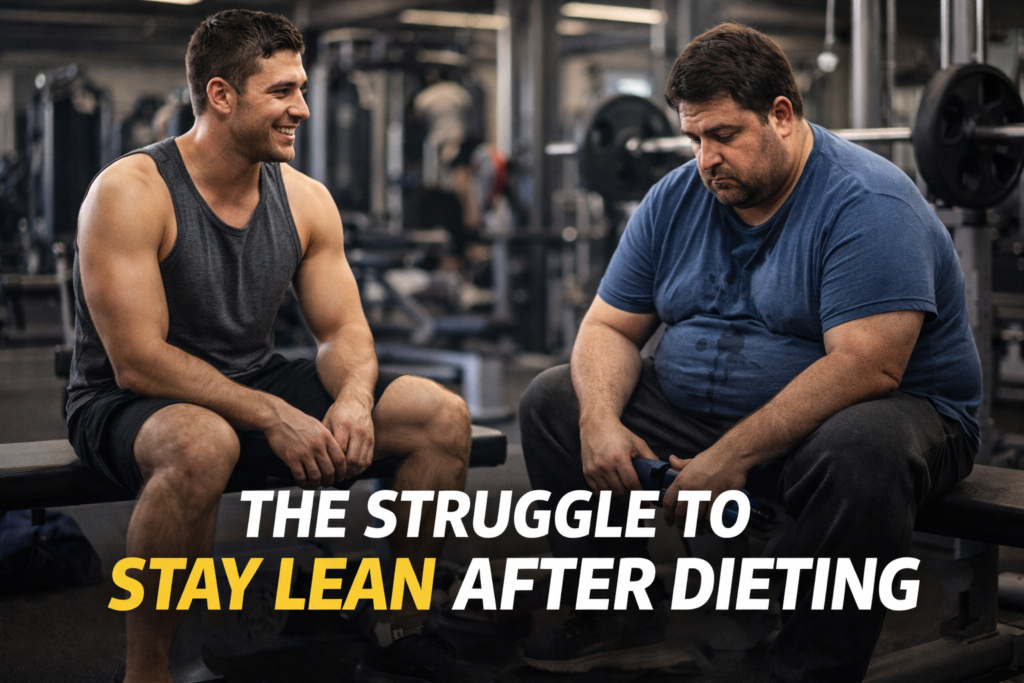

Why Most People Fail to Stay Lean After Dieting
Table of Contents
- Why Most People Fail to Stay Lean After Dieting
- Fat Loss Is Temporary by Default
- The Metabolic Reality After a Diet
- Why “Going Back to Normal” Doesn’t Work
- The Absence of a Maintenance Phase
- Psychological Fatigue Plays a Role
- Why Short-Term Diets Create Long-Term Problems
- What Successful Maintenance Looks Like
- Shifting the Goal From Losing to Keeping
- Final Thoughts
Losing fat is difficult—but for most people, the real challenge begins after the diet ends.
In our previous post, “Why Being Lean Matters More Than Being Big,” we explored why prioritizing leanness over sheer size can dramatically improve health, performance, and body composition. That article explained how excess fat — unlike functional muscle — can act as non-functional mass, hold back athletic performance, and negatively impact metabolic health, while being lean supports better strength, energy, and long-term fitness results. aggressivefatloss.
I’ve seen this pattern repeat itself countless times. Someone commits to a diet, stays disciplined for weeks or months, reaches their goal weight, and then slowly—sometimes quickly—returns to where they started.
This isn’t a failure of willpower.
It’s a failure of understanding what happens after dieting.
Fat Loss Is Temporary by Default
Most diets are designed to end.
Calories are reduced.
Rules become strict.
Life is put on hold.
When the diet finishes, people naturally return to their old habits—because nothing new was built to replace them.
Without a transition plan, fat regain is almost inevitable.
The Metabolic Reality After a Diet
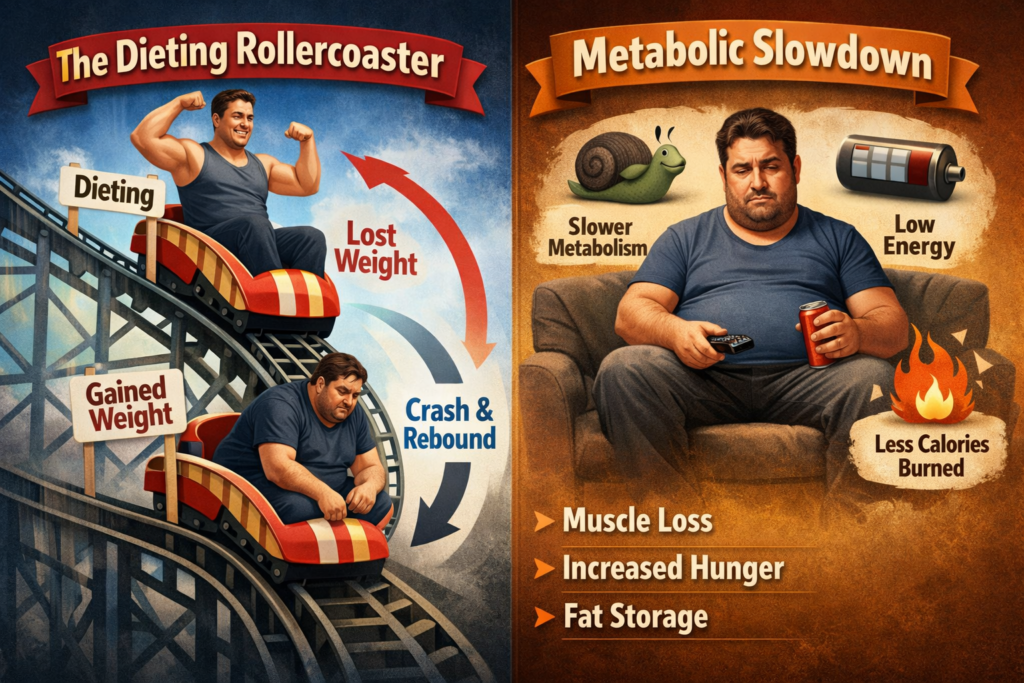
After sustained calorie restriction, the body adapts.
- Hunger hormones increase
- Energy expenditure decreases
- The body becomes efficient at storing energy
This is a normal biological response, not a personal flaw.
The problem is that most people aren’t prepared for this phase.
Why “Going Back to Normal” Doesn’t Work
One of the most common mistakes is returning immediately to pre-diet eating levels.
From the body’s perspective:
- Calories increase suddenly
- Hunger is still elevated
- Metabolism hasn’t fully recovered
The result is rapid fat regain, often faster than the original fat loss.
This experience discourages people and creates the illusion that dieting “ruined” their metabolism.
The Absence of a Maintenance Phase
Staying lean requires learning how to maintain.
Maintenance is not passive.
It’s a skill.
Without practicing maintenance:
- Portion awareness fades
- Eating becomes reactive
- Weight creeps up unnoticed
This is where most progress is lost—not during the diet itself.
Psychological Fatigue Plays a Role
Dieting demands restraint.
When restraint is prolonged without flexibility, mental fatigue builds.
Once the diet ends, people often swing to the opposite extreme—not because they want to, but because the pressure is finally released.
A sustainable approach reduces this rebound effect.
Why Short-Term Diets Create Long-Term Problems
Aggressive diets prioritize speed over sustainability.
They often lead to:
- Muscle loss
- Hormonal disruption
- Negative relationship with food
These factors make long-term leanness harder, not easier.
Slow, controlled fat loss tends to produce more stable outcomes.
What Successful Maintenance Looks Like
People who stay lean long-term usually share similar habits:
- Gradual calorie increases after dieting
- Continued strength training
- Regular weight monitoring without obsession
- Flexible, but structured eating patterns
They don’t “finish” dieting—they transition out of it.
Shifting the Goal From Losing to Keeping
Fat loss should not be viewed as a temporary project.
The real goal is learning how to:
- Eat appropriately for your lifestyle
- Adjust intake as activity changes
- Recognize early signs of weight regain
This shift in mindset is what separates short-term success from long-term results.
Final Thoughts
Most people don’t fail because they can’t lose fat.
They fail because no one teaches them how to stop dieting properly.
When maintenance becomes part of the process, staying lean stops feeling like a constant battle—and starts feeling manageable.