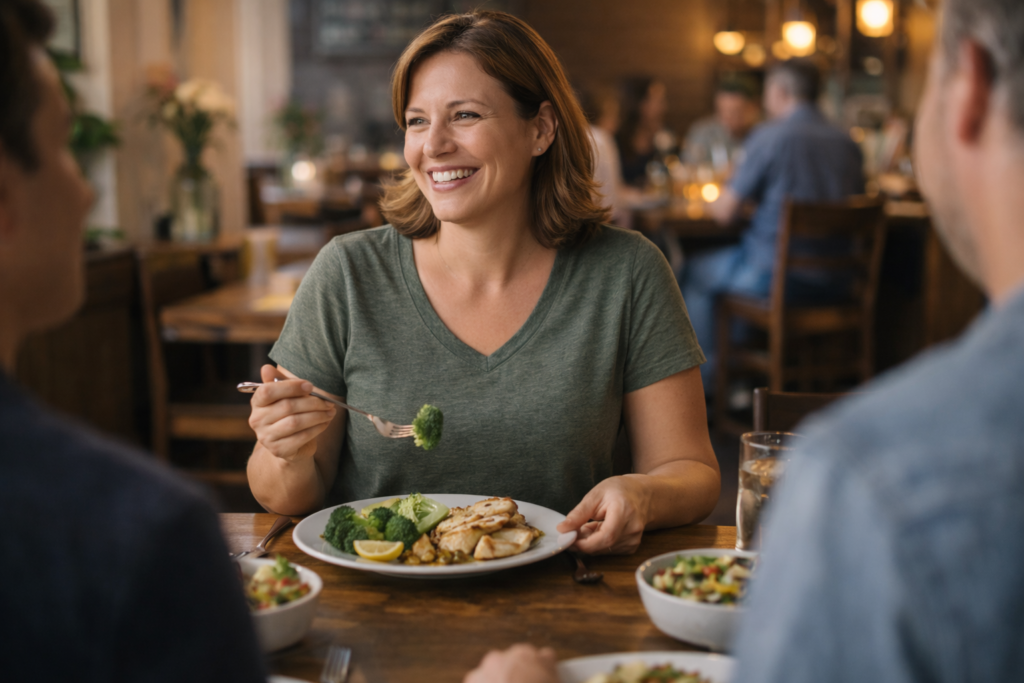

How to Eat Socially Without Losing Fat Loss Progress
Table of Contents
- How to Eat Socially Without Losing Fat Loss Progress
- Why Social Eating Feels Difficult During Fat Loss
- Perfection Isn’t Required at Social Events
- Focus on the Big Picture
- Simple Strategies That Reduce Stress
- Managing Social Pressure Gracefully
- Alcohol and Awareness
- Enjoy the Experience, Not Just the Food
- Returning to Routine Matters Most
- Avoid the “Damage Control” Mindset
- Building Confidence Over Time
- Final Thoughts
One of the biggest challenges during fat loss doesn’t happen in the kitchen at home.
It happens at:
- Family gatherings
- Social events
- Dining out with friends
Many people feel forced to choose between progress and participation. Over time, I learned that this is a false choice.
Fat loss and social eating can coexist—when approached realistically.
Why Social Eating Feels Difficult During Fat Loss
Social situations remove structure.
Portion sizes are unknown.
Food choices are limited.
Social pressure is present.
Without a plan, these moments can feel overwhelming and lead to frustration afterward.
Perfection Isn’t Required at Social Events
Trying to eat perfectly in social settings often backfires.
Rigid rules increase stress and reduce enjoyment. In many cases, they lead to overeating later once restraint breaks.
Progress depends on overall patterns, not isolated meals.
Focus on the Big Picture
One meal does not determine fat loss success.
Consistency across weeks matters more than individual events. Viewing social meals as part of life—not disruptions—helps maintain perspective.
Simple Strategies That Reduce Stress
Practical approaches include:
- Eating normally earlier in the day
- Prioritizing protein when possible
- Being mindful of portions without tracking
These strategies support balance without drawing attention.
Managing Social Pressure Gracefully
Social pressure often feels stronger than it is.
Most people are focused on their own experience, not your plate. A confident, relaxed approach usually ends questions quickly.
No explanation is required.
Alcohol and Awareness
Alcohol is often present in social settings.
Being aware—not restrictive—helps:
- Slowing down consumption
- Choosing lower-volume options
- Hydrating consistently
Awareness prevents unintentional excess without eliminating enjoyment.
Enjoy the Experience, Not Just the Food
Social events are about connection.
Focusing solely on food can reduce enjoyment and increase stress. Engaging in conversation and activities shifts attention away from constant eating decisions.
Returning to Routine Matters Most
What happens after the event matters more than the event itself.
Returning to normal eating and training patterns protects progress and prevents a single meal from becoming a setback.
Avoid the “Damage Control” Mindset
Over-restricting after social eating often leads to cycles of guilt and overeating.
Normalizing occasional indulgence supports long-term consistency.
Building Confidence Over Time
Each successful social experience builds confidence.
Over time, flexibility becomes natural—and fat loss stops feeling fragile.
Final Thoughts
Fat loss doesn’t require isolation.
Learning how to eat socially without guilt or extremes allows progress to continue alongside a full, enjoyable life.
Sustainability depends on inclusion, not avoidance.
Beyond making smarter food choices in social settings, long-term fat loss success is also strongly influenced by how much you move outside the gym. Non-Exercise Activity Thermogenesis (NEAT)—which includes daily movements like walking, standing, and general activity—plays a critical role in maintaining energy balance over time. Staying active throughout the day helps offset occasional higher-calorie social meals without requiring restrictive dieting or excessive exercise. This lifestyle-based approach supports consistency and sustainability, making it easier to enjoy social eating without derailing progress. To learn more about how daily movement supports long-term fat loss, read The Role of NEAT in Long-Term Fat Loss.